
Watching the war unfold live and simultaneously witnessing Europe’s inadequate response was a crucial warning for me. We can no longer rely on Cold War-era assumptions, protracted acquisition processes, and outdated capacities.
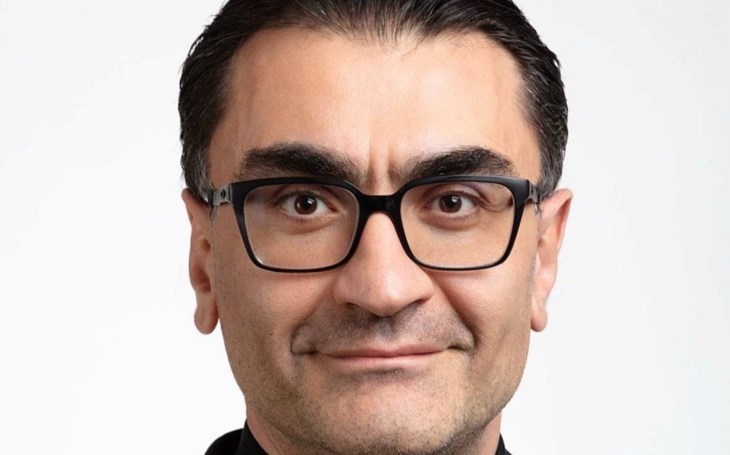
Armen Agas
Strategy Director and Owner at Skyline s.r.o.
Let’s start with the current conflict. Has the Russian army been significantly weakened by the war? Do you still consider Russia a threat?
Although Russia has suffered significant losses—particularly in strategic aviation, radar systems, and conventional forces—its key strategic capabilities remain largely intact. What’s especially concerning is that Moscow is learning in real-time how to conduct large-scale conflict against forces equipped with Western technology.
Particularly alarming is the area of long-range strikes. Russia has demonstrated the ability to reach deep into enemy territory using a diverse arsenal of missiles and drones targeting critical infrastructure.
Russia possesses an impressive array of long-range missiles—possibly the widest in the world. For example, the 3M14, 9M729, and Kh-101 missiles have a nominal range of up to 2,500 kilometers. This enables Russia to conduct attacks from the air, land, and sea. And that’s not even considering its extensive arsenal of intercontinental ballistic missiles.
But aren’t Russian systems less accurate? Don’t Western forces have an advantage in missile precision?
Modern Russian missiles are actually quite accurate. Accuracy issues were typical of older generations, which are now being gradually phased out.
Beyond range, a crucial factor is the missile’s survivability post-launch. While NATO relies on stealth technology to penetrate enemy defenses, Russia bets on quantity and speed to overwhelm defenses. That’s why it’s heavily investing in hypersonic systems like the Zircon and Avangard missiles.
No other country currently possesses such a diverse combination of slow, inexpensive drones and expensive, highly sophisticated missiles. What’s impressive is not just their range but also how these technologies are integrated to breach air defenses.
The tactical experience Russia has gained over the past three years is significant. In many ways, it’s writing the textbook on long-range warfare for the 21st century.
Does this mean future wars will primarily involve missile attacks?
I believe that’s the direction we’re heading. The idea of Russian tanks rolling into European capitals now seems outdated. What concerns me far more is the vision of skies filled with missiles and drones—destroying infrastructure, undermining morale, and crippling the ability to wage war.
How should we respond?
We must invest in both missile defense systems and our own long-range offensive capabilities. Our goal must be to reduce the chance of Russian missiles penetrating our airspace while increasing the likelihood that our missiles survive in theirs.
Distance is crucial for European defense. Except for the M51 and Trident D5 nuclear ballistic missiles launched from submarines, European industry currently doesn’t produce missiles with a range over 1,000 kilometers. Given Russia’s vastness, we need to be able to strike deep into its territory using a wide range of conventional warheads.
At this moment, Russia can target almost all European infrastructure, while our capabilities barely reach the Urals.
We also need a large number of inexpensive drones that can be used in combined attacks, against less valuable targets, or to “overwhelm” enemy defenses.
The bureaucracy of defense structures must break out of isolation and collaborate with flexible commercial firms to keep pace with the evolution of warfare.
Another crucial area is nuclear deterrence. Europe must strengthen its nuclear arsenal because it faces the most nuclear-armed country in the world. This must occur in close coordination with NATO.
The Czech nuclear industry has a unique opportunity to expand into dual-use technologies. Europe will likely need to increase its deterrence capacities—and the Czech Republic, thanks to its existing capabilities, can play a pivotal role.
Czech nuclear expertise is extensive—from uranium mining to operating functional reactors and advanced research. The country has proven itself as a reliable operator, especially in modernizing Soviet reactors to Western standards.
Although parts of the fuel cycle—such as enrichment—depend on foreign partners, the Czech industrial and scientific base could also support military objectives if decided at the political level.
If Europe decides to strengthen its deterrent position in cooperation with France, the Czech Republic could be a key partner—thanks to its raw materials, fuel know-how, qualified experts, research background, and ability to produce critical components.
Existing partnerships with France could serve as a foundation for deeper technical collaboration.
It seems you anticipate a split between the USA and Europe in defense matters. Is the end of the transatlantic alliance near?
I don’t think the alliance is ending, but it’s certainly changing. “Decoupling” sounds sophisticated, but in reality, Europe hasn’t fully detached even from Russian energy sources. Military-technical separation from the United States is practically impossible in the near future. And frankly—neither side wants that.
Decades of interoperability and defense cooperation have tightly connected the American and European arms industries. Complete separation would not only be extremely difficult but also strategically unwise.
From both political and military perspectives, continued cooperation between the USA and Europe is essential. Russia remains a direct threat to the USA—its missile programs are clearly aimed at American naval assets.
Incidents involving Russian aviation near American ships aren’t just gestures—they’re tests of resilience and explorations of defensive weaknesses.
We shouldn’t forget that the USA and Russia share a common border—the Diomede Islands near Alaska are only a few kilometers apart. And the Arctic is rapidly becoming another geopolitical battleground.
The war in Ukraine has also revealed a strong alliance: Russia, China, North Korea, and Iran. This coalition plays a key role in enabling Russia to conduct a prolonged conflict. Compared to this, the Axis powers of World War II seem almost weak.
The USA needs allies more than ever. I anticipate more debates about defense budgets. The USA is an overburdened superpower. It needs European partners to shoulder more responsibility. And if European states pay more, it should also reflect in contracts for domestic industries.
What role can the United Kingdom play in European defense?
A crucial one. Britain is indispensable for European security. It has been one of the most active supporters of Ukraine—providing weapons, training, and intelligence faster than many EU countries.
Its role in ensuring security in the North Seas is key, especially with the growing importance of the Arctic and underwater infrastructure.
The United Kingdom brings two essential advantages: a credible nuclear deterrent and top-tier intelligence capabilities, supported by its key role in the Five Eyes alliance.
This gives Europe access to one of the most advanced intelligence networks in the world, which no EU state can replicate.
While Brexit has brought political tensions, defense cooperation offers a space for new rapprochement. Security is shared, existential, and transcends politics.
No serious European defense strategy can exclude the United Kingdom.
What are you currently working on?
Together with partners, we’ve recently acquired the company Skyline to support European defense readiness. Our goal is to supply technologies, components, and capabilities that European dual-use platforms need for developing modern solutions for both civilian and defense purposes.
The European defense industry is full of capacity gaps. And these represent both strategic challenges and business opportunities.
What needs to be done to increase Europe’s defense readiness? Where are the biggest reserves?
There are many. The European drone ecosystem is fragmented. Research into hypersonic weapons is just beginning. Missile production capacities are set for peacetime operation, not prolonged conflict.
We urgently need more suppliers, shorter innovation cycles, and the ability to scale under crisis conditions.
Speed and flexibility in acquisition, hardware compatibility, and software updates are key to aligning the interests of armed forces and ministries with private sector innovations necessary for high-intensity warfare.
That’s why close cooperation with the United States and democratic allies in Asia is crucial. The USA is a world leader in missile defense—with capacities on land, sea, air, and space.
Europe needs technologies, industrial depth, and resilient supply chains. Allies, in turn, want access to European markets. This balance can work if we act quickly and strategically.
Developing some critical technologies and building manufacturing infrastructure in Europe will be costly and time-consuming. Therefore, economic coordination and connection with allies are essential if Europe is to build a long-term sustainable defense.
Deeper cooperation with Ukraine is also crucial. Their real-time battlefield experiences are invaluable. They show what works, what doesn’t, and what’s urgently needed. Ignoring these experiences would be a huge strategic mistake.
What personally led you to this?
Watching the war unfold in real time, while also seeing Europe’s inability to respond adequately, was a critical wake-up call for me. We can no longer rely on Cold War-era assumptions, lengthy procurement processes, and outdated capacities.
This is not about militarization for its own sake. It’s about ensuring sovereignty, resilience, and credible deterrence in an increasingly unstable world. That requires strong communication skills and a deep understanding of the real-world defense environment—its capabilities and supply chains. Our company possesses these thanks to our experience and partnerships across NATO countries.
Skyline is a commercial project with a clear strategic vision: that Europe must be capable of defending itself—in cooperation with the United States, NATO, and democratic allies. And that begins with eliminating production shortfalls. We want to be part of a future Europe that is strategically sound, commercially strong, and militarily capable.
0 Comments